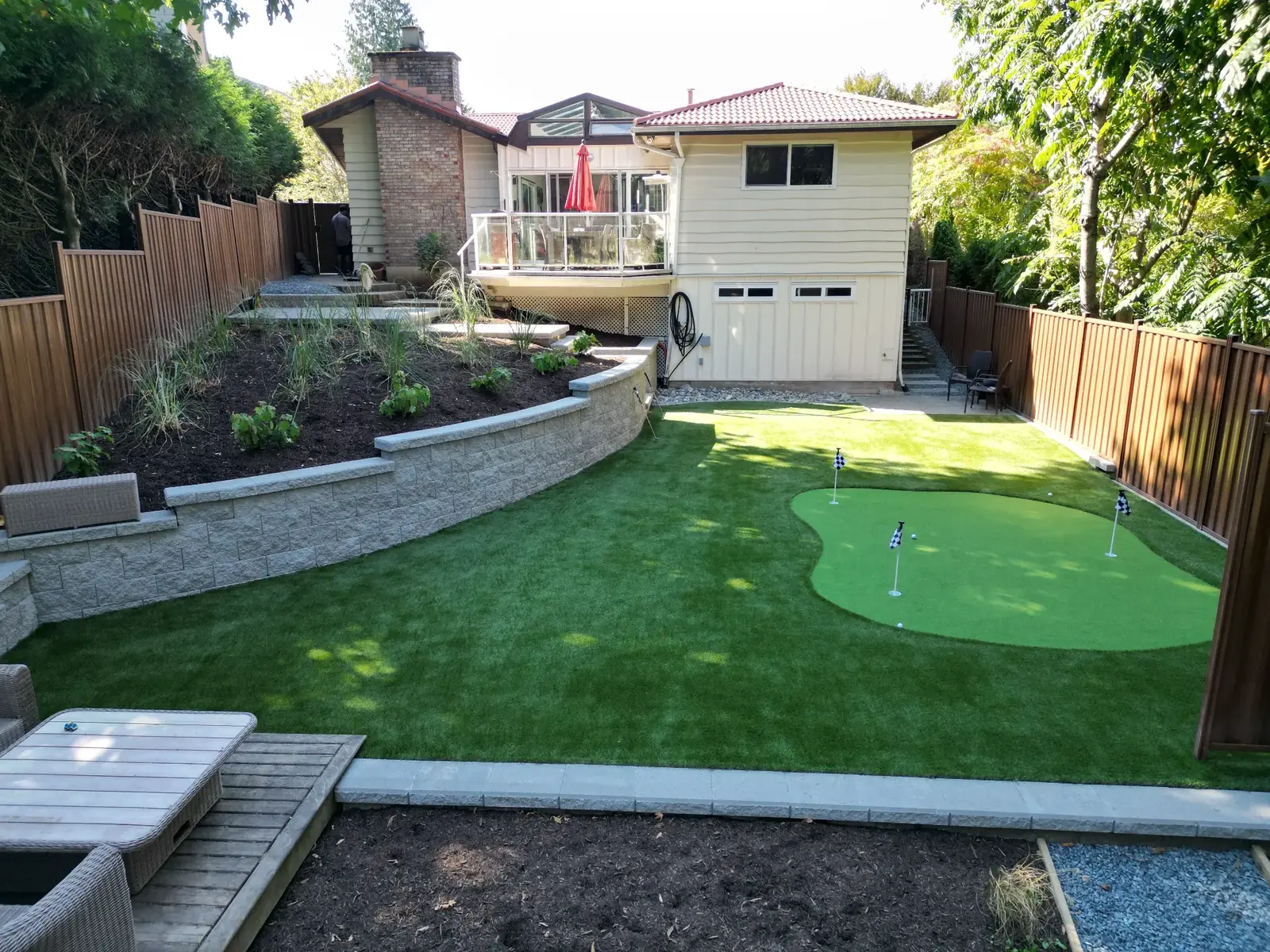
The base is a landscape detail, not hidden filler
Artificial turf does not correct a soft, uneven or poorly draining yard on its own. Preparation starts by removing vegetation, roots and loose material where required, then setting a grade that works with the rest of the property. A stable, compacted aggregate base provides the platform for the finished surface. The exact depth and components are site decisions; soil condition, access, adjoining hardscape and drainage requirements matter more than a universal recipe.
The drainage question reaches beyond the turf. Water should not be redirected toward a home, held at the foot of a wall or trapped where a turf edge meets a patio. Soft or saturated areas may need further investigation and a different preparation approach. The goal is a surface that fits the property's water-management plan, not a green covering that conceals an unresolved low spot. This is especially important before walls, stairs or planting beds close off later access to the area.
Seams, grain and borders need room in the layout
The turf layout is planned before final cuts. Roll widths, the direction of the fibres, curves around beds, fence lines and obstacles all influence where a seam can sit. When more than one piece is necessary, aligned fibres and a controlled joint help the surface read as one field of turf. Locating seams with the visible views and expected traffic in mind is more deliberate than simply joining the shortest offcuts.
A reliable perimeter is equally important. Turf must meet each hard edge cleanly without a loose lip, a wrinkle or a void that collects debris. In an Abbotsford backyard, that may mean a change from turf to decorative rock, a patio, a planting bed, a fence or a wall cap. The edge detail should protect the turf line while allowing the adjacent material to do its own job. It is an interface between materials, not just a trim line.
Putting contours should be intentional
A putting green is not simply lawn turf with cups added. Its surface, infill and contours are selected for a practice-oriented use. The usable shape starts with the room available for standing, walking around the green and moving between the house, patio and garden. Cup locations, fringe and approach space can then be discussed with the owner's preferred type of practice in mind. A modest green with clear circulation can be more useful than a larger shape that blocks a path or crowds a sitting area.
Contours are formed during base work, not pressed into a finished surface as an afterthought. Gentle changes can add interest, while exaggerated slopes can make a compact green less practical. The required surface transitions are checked at the same time: fringe to green, turf to path, and green to wall or garden. This approach lets the playing area look settled into the landscape rather than placed on top of it.
Integrating turf with retaining walls and levels
Where a yard changes elevation, a retaining wall can establish the usable level before the turf is detailed. In the Abbotsford project, walls separate the putting area from other backyard zones, while steps and planted beds connect the levels. That visible sequence is a useful reference for coordination: structural and grading decisions come first, then finished surfaces can meet them at deliberate heights.
A wall is not a universal answer for a slope, and its engineering, drainage and permit needs depend on the site and design. For a project with a proposed wall, pool, significant grade work or other regulated element, confirm requirements with the City of Abbotsford before construction. The City states that a property owner is responsible for obtaining a required building permit before work begins. Reviewing those questions early avoids designing turf edges around assumptions that later change.
Care keeps the finished surface usable
Artificial turf removes mowing and routine lawn watering, but it is not maintenance-free. Remove leaves and debris before they settle into the fibres, brush areas that are regularly walked on, and rinse or clean a surface in a way that suits its use. Pet areas deserve an upfront conversation about traffic, cleaning expectations and drainage. A putting surface also benefits from occasional grooming and inspection of its edges, cups and infill condition.
Access is part of care as well as construction. Keep practical routes to drains, wall faces, planting beds and service points rather than letting a new feature block them. If the yard will be built in phases, establish the finished elevations and future material transitions early. That helps a later patio, planting area or lighting addition join the turf without undoing completed work.